

By EVOBYTE Your partner for the digital lab
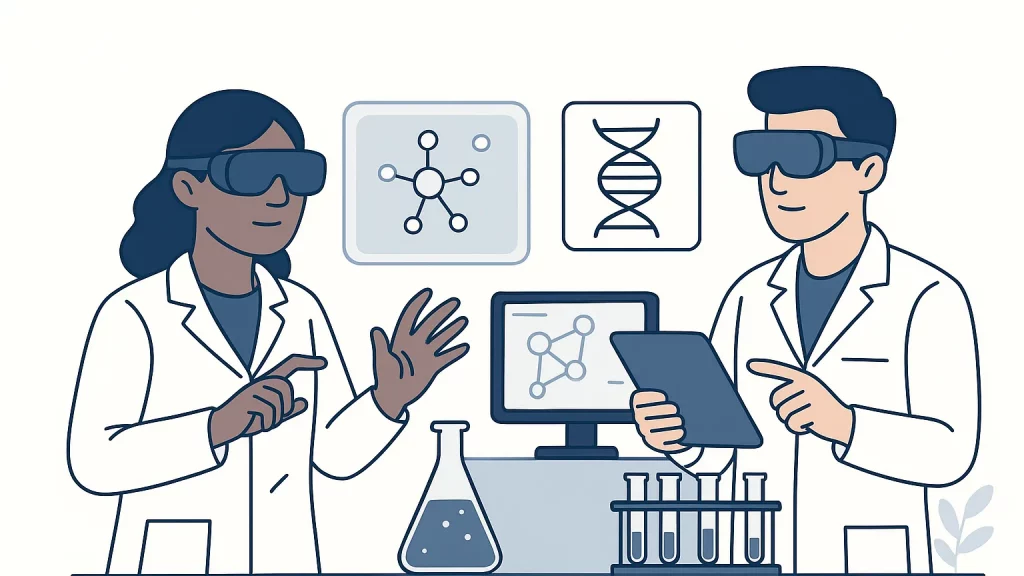
Augmented Reality places digital information into a worker’s field of view while they perform real tasks. In a Digital Lab, AR turns paper SOPs, equipment dashboards, and training notes into hands‑free overlays that appear exactly where work happens. Instead of juggling binders or clicking through screens, staff can see the next step, confirm a barcode, or consult an expert without leaving the bench. This practical blend of the physical and digital reduces interruptions, shortens training time, and helps teams make the right decision at the right moment.
What is Augmented Reality (AR) and what do lab teams need?
Augmented Reality shows context‑aware instructions, warnings, and data on top of the real world. AR glasses enable this “heads‑up” experience. To equip lab workers, choose devices that are comfortable for a full shift, support voice commands through PPE, and can be cleaned with standard disinfectants. In controlled areas, cleanroom‑rated hardware such as HoloLens 2 Industrial Edition can meet ISO 14644‑1 requirements, while also supporting secure enterprise apps. Reliable Wi‑Fi, identity management, and mobile device management keep content current and access controlled. On the software side, connect AR to your ELN or LIMS so step lists, checklists, and results flow automatically. If your lab operates under GMP, ensure electronic records and e‑signatures align with 21 CFR Part 11 so that time stamps, approvals, and audit trails stand up to inspection.
Two practical AR use cases in daily lab work
First, guided SOP execution. Imagine a QC analyst preparing a buffer. AR glasses display a step‑by‑step workflow in the user’s line of sight, with timers and reagent IDs anchored to the actual vessels. The system prompts the analyst to scan barcodes to verify lot numbers and expiry dates before proceeding. Each action logs automatically with time and user ID, and the final record syncs to the LIMS. The result is fewer deviations, less transcription, and faster review by exception. New hires ramp up quickly because the best practice lives in the workflow, not just in a binder or someone’s memory.
Second, remote expert assistance and instrument upkeep. When a bioreactor alarm appears or an HPLC needs a seal change, a technician can call a remote specialist from the glasses. The expert sees what the technician sees, draws live annotations in the field of view, and shares short clips or exploded diagrams, all hands‑free. In cleanrooms, certified AR hardware avoids bringing paper or laptops into the suite. Repairs finish sooner, downtime drops, and knowledge spreads across shifts because recordings can be reviewed later as bite‑size training.
AR fits naturally with the Digital Lab because it closes the last mile between data and action. It keeps attention on the work, not on a screen, while still capturing complete, compliant data. The payoff is higher right‑first‑time execution, faster onboarding, and better use of scarce expert time.